 Back to Events & Publications
Published: 2026 June 17
Back to Events & Publications
Published: 2026 June 17
From Mars Ideas to Earth Realities: 4 Takeaways from BuiltWorlds Paris 2026
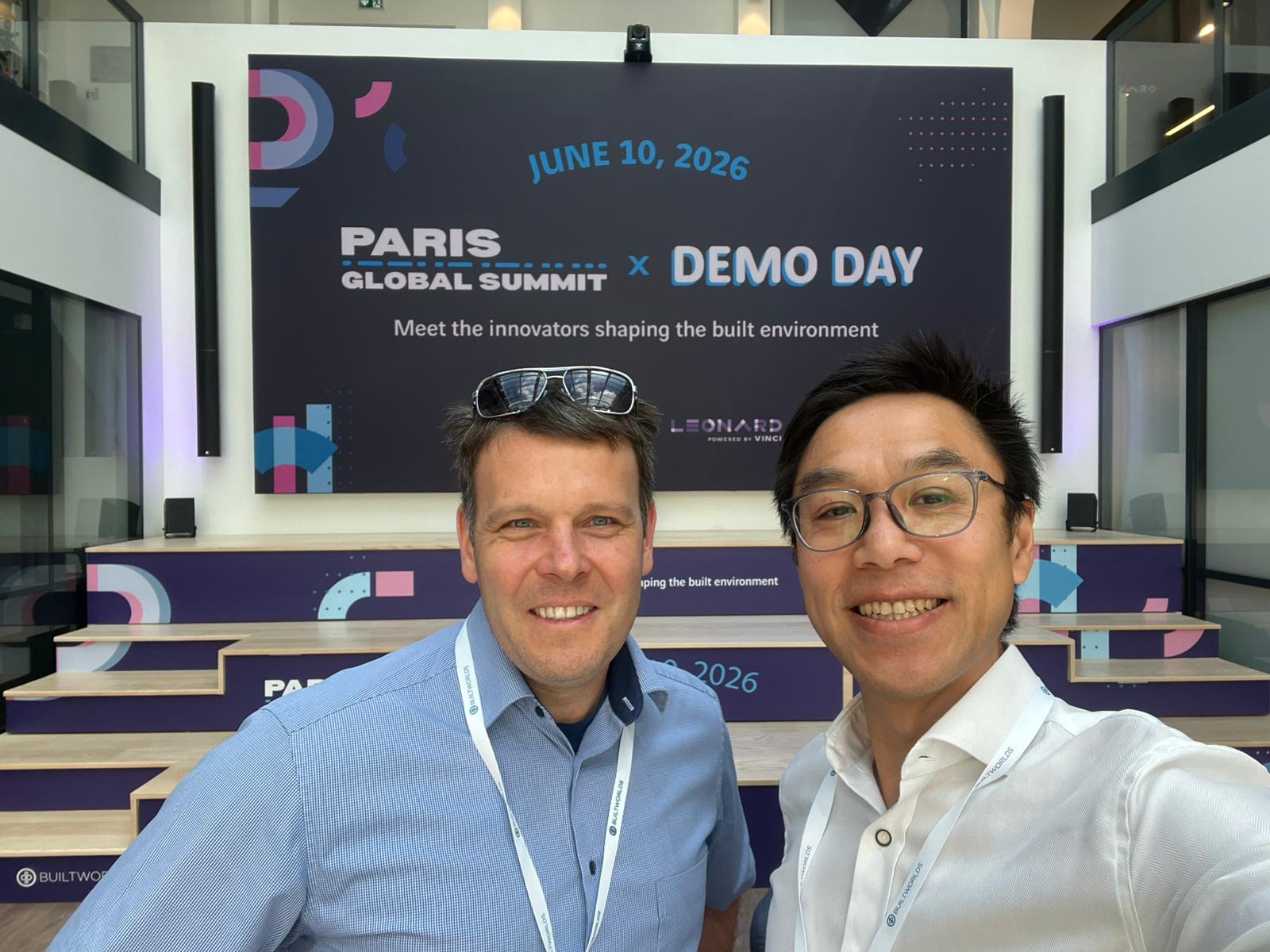
When our Senior Commercial Advisor returned from the BuiltWorlds Paris Summit last week, he sat down with the team to unpack what’s coming next for AEC, ConTech, and built environment asset management. His overarching takeaway? The future isn't a distant vision—it's actively deploying on job sites and in data centers right now.
Here are the four big industry shifts driving our conversations post-Paris, along with a look at how SBI is positioning itself at the center of this transformation.
1. Agentic AI is Democratizing Engineering
The conversation around AI in construction is shifting rapidly from smart drafting assistants to agentic workflows. NVIDIA’s multi-agentic AEC demonstrations in Paris proved that this isn't just about making design software slightly faster—it's about democratizing engineering through codified domain knowledge.
When complex engineering logic and regulatory benchmarks are embedded directly into multi-agent systems, the fundamental role of traditional design software changes. Designers and engineers spend less time managing software friction and more time executing high-value, creative decision-making.
2. Physical AI Is Already On-Site
Autonomous construction is no longer confined to controlled lab environments or pitch deck renders. Companies like Gravis Robotics and Xpanner are actively operating autonomous excavators and heavy equipment on live, active job sites.
Bringing physical AI to real-world conditions delivers immediate gains across three critical metrics: speed, quality, and safety. Watching autonomous machinery execute complex Earth-moving tasks in real time confirms that physical AI is rapidly becoming standard site infrastructure.
3. Capital Is Following Quality
The investment climate for construction technology is maturing. ConTech is no longer viewed as a niche or speculative bet; generalist venture capital firm partners are actively entering the space, bringing fresh perspectives from high-growth software and hardware verticals.
At the same time, a new wave of serial builders is entering the market. Founders with proven execution track records are raising the bar for solution design, unit economics, and scalable deployment across the entire industry.
4. "Watts per Token" Is the New Strategic Edge
Data centers and AI infrastructure require massive amounts of energy, making computational efficiency a core strategic imperative. Industry leaders are now leveraging physical world simulations—trained on both real and synthetic asset data—to optimize AI factories before a single physical brick is laid.
Calculating energy efficiency per unit of compute ("Watts per Token") isn't just an ESG target—it’s a competitive requirement for building the next generation of digital and physical infrastructure.
Building the "Bloomberg Terminal for the Built Environment"
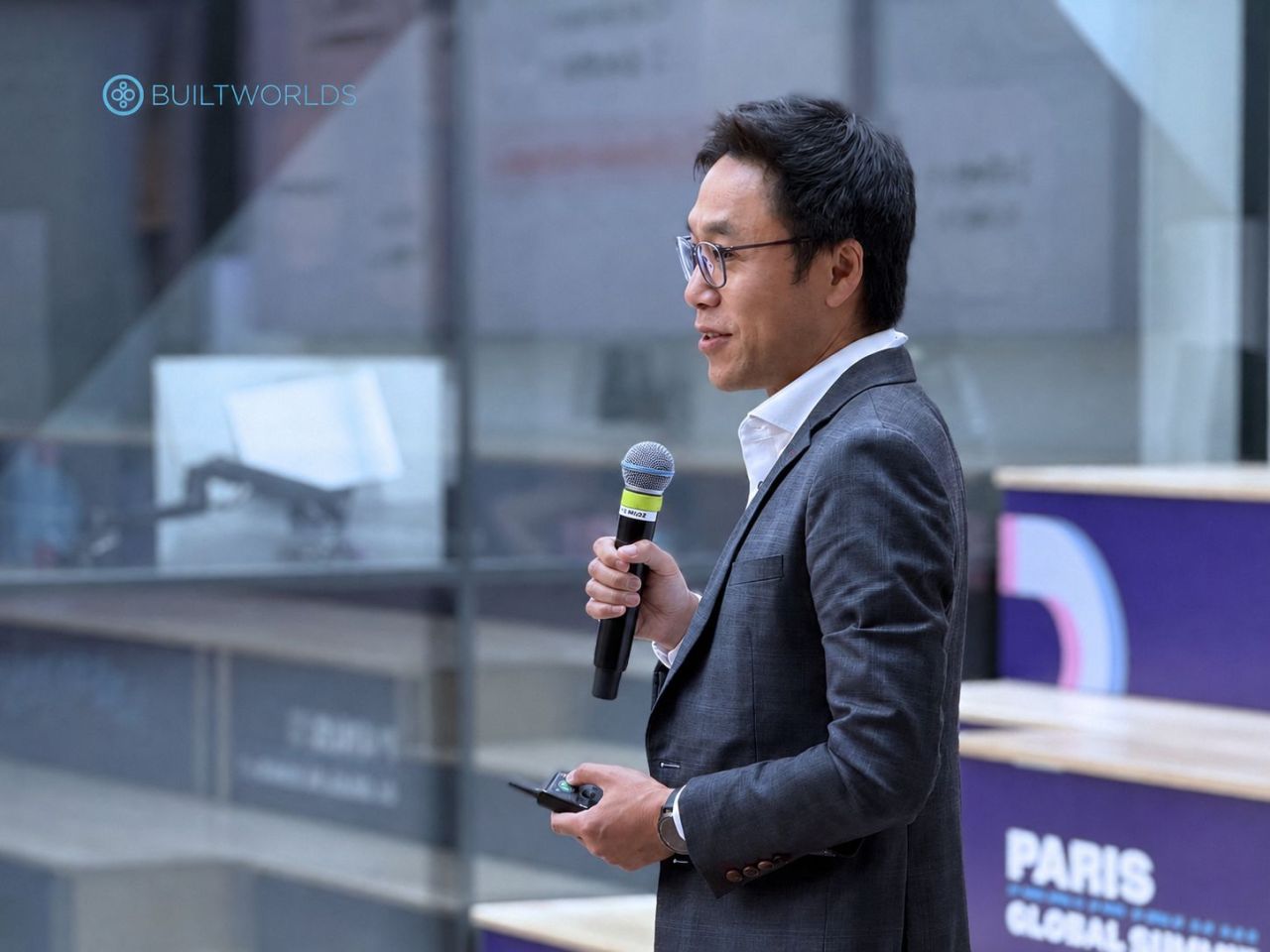
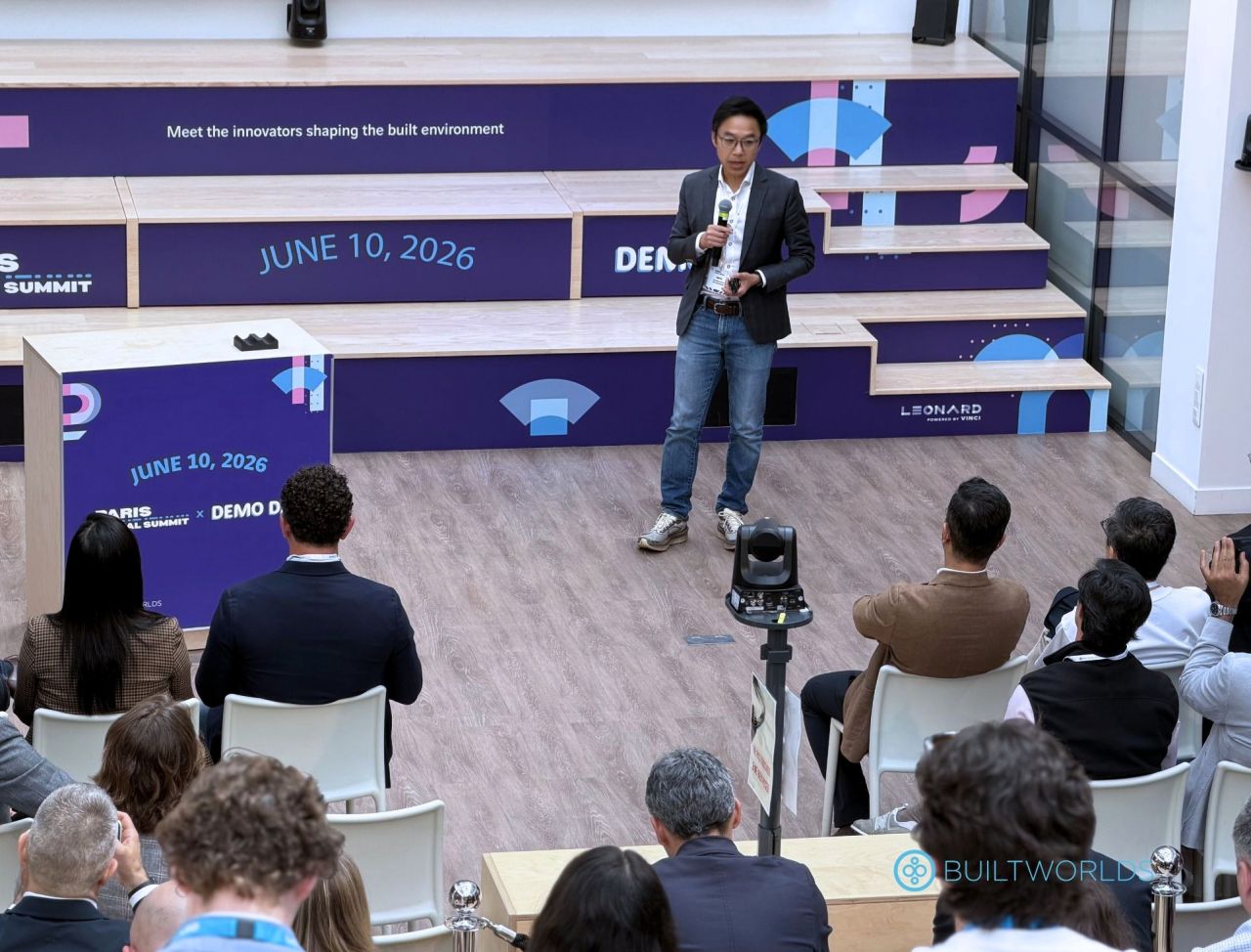
A highlight of the summit was sharing our vision on stage alongside Wolfgang Lukaschek of Blue Auditor.
We spend 90% of our lives inside buildings, making the built environment the world’s largest asset class. Yet climate-related risks and asset performance metrics in real estate remain chronically mispriced. Why? Because building data remains stubbornly unstructured, fragmented, and difficult to verify at scale.
At SBI, our goal is straightforward: to build the Bloomberg Terminal for the built environment.
By transforming disconnected operational, spatial, and environmental data into trusted, standardized intelligence, we can:
Eliminate transactional friction across real estate acquisitions, development, and financing.
Improve long-term capital allocation decisions for asset owners and investors.
Unlock billions in institutional capital targeted at resilient, sustainable infrastructure.
Solving the data puzzle of the built environment is one of the toughest challenges in technology today. But as the energy and insights from Paris demonstrated, the path forward is clear—and we're just getting started.